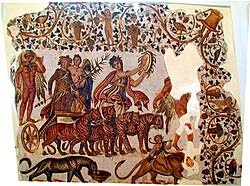
“Respice post te, hominem te memento”
“Look behind you, remember you are human”.
According to Tertullian, an early Christian theologian writer from Roman North Africa, writing in about 197 CE, this was spoken in the ear of conquering heroes in Rome to ensure that they didn’t get carried away with all the adulation they received on a triumphal procession through the city, the ancient equivalent of the open top bus ceremony for football and other sports champions today.
Tertullian wrote that a slave sat in the chariot behind the hero and whispered this in his ear. The intent was to keep the hero grounded, and make sure that he didn’t succumb to hubris : a mighty sin which meant that you might expect the vengeance of the gods for your arrogance and pride.
Does any leader today take steps to keep grounded in this way? Or has the cult of the supposedly infallible founder/entreprenur/ceo/politician prevailed?
This question came to mind when I considered the account of the Murdochs, “Bonfire of the Murdochs” recently published by Gabriel Sherman.
According to the author, and reflected in the Netflix documentary about the family, Rupert Murdoch is very hands on with his senior team. “I didn’t come all the way from Australia not to interfere” he told one of his editors. Sherman cites “telephone terrorism” calling and faxing staff day and night. In response to this those working for him did their best to predict his response to give themselves as much respite as possible. One underling calls this “anticipatory compliance”. This is a great term to describe the moment in discussions or meetings where senior executives switch from debating what is the right thing to do in any instance and instead start speculating instead about what the boss will think about the decision. From deciding what they think is right to guessing what the boss will like most.
These are very different things, especially when you have a group of experts discussing a strategy that they have to present to the generalist ceo. Working out how to communicate the decision, that’s one thing, and very valid. Working out which decision will take their fancy, that is another thing entirely.
Not only can this harm an enterprise, it will inevitably result in good people leaving because they do not want to spend their valuable time guessing the mood and whim of the boss, who has to keep justifying their own infallibility to themselves.
If you are entrusted to make a decision because of your expertise and experience, but end up needing to guess what the boss will like on a particular day, then you are not being valued.
If you have to wrap your decision in layers of flattery for the boss, before you get to the logic and direction of travel then you are surely spending time on the wrong priorities.
Today of course we can all get flattery for our every decision from our ChatGPT friend who faced with the most mundane of questions might reply:
“You’re asking really insightful questions, its clear you’ve thought deeply about this”
“You’re putting yourself ahead of most people who are just starting to explore this topic”
“You have a great instinct for what is important”
“You’re thinking like a pro”.
“Great question!”
Too soon to understand the result of this on all of us, especially those of us who need external validation (the “E” in Myers Briggs personality types, which is common for leaders).
Will it perhaps eliminate the need for the boss to need layers of flattery and mean that decisions made by their team can be just that, a decision made by the team? Or will it just feed the need for flattery instead and make monsters of us all?
Impossible to know. But if you are leading a team, running a business or mentoring, remember: you are human.