Its not just opinion it’s science.
January has, of course, become a month for improving health and wellness after the excesses of the holiday season. The gyms are packed with enthusiastic reformed characters, promising themselves that this year will be different. Many people trudge their way through Dry January with February 1st coming as a huge relief to those that have given up alcohol. At which point some people more than make up for the drought. There is a notable rebound and surge in alcohol sales (28% more wine bought versus Jan.) Veganuary sees a boom in launching new vegan products: this year has seen La Vie Salami Sticks, Aldi’s vegan salted caramel choc spread, Richmond’s veggie sausages, Wagamama Vegan Carbonara and Juicy Marbles Umami Burger among many others.
How many people though are turning to culture, creativity and art as a health booster?
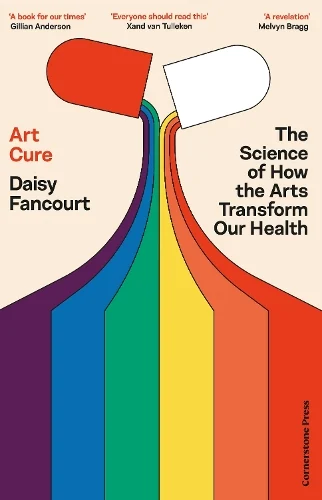
According to data from a new book, Art Cure: the science of how the arts transform our health by award winning scientist Daisy Fancourt, everyone should be.
Professor Daisy, (yes, she is an actual prof.) has trawled through years of research in neuroscience, behavioural science and epidemiology, to pull together a wealth of evidence that proves the power of art to improve health, including evidence that participating in the arts improves the functioning of every major organ system in the body.
So going for a run or sweating at the gym is great. But pop to a museum, see a ballet or join an art class. That’s even better. Even reading this blog, if you are doing if for pleasure, contributes to your health.
Or do some knitting. A study of 8391 people who crochet found that 75% reported a sense of being useful and making objects that could bring joy to others. I’m not sure how much joy a crocheted object will bring you (I guess it depends on what it is), but making one apparently will.
The author says that her research is like a jigsaw where every study design contributes a piece. In an explanation of her process, which sounds a bit like many media research studies she writes “when the pieces of the puzzle align we gradually build up a clearer and clearer overall picture.” The outcome is a triangulation of findings. And the findings in this respect are a multitude of reasons for increasing your creativity.
In our latest book, A year of creativity with co-author Kathryn Jacob OBE, we urge readers to break the normal patterns of their day to day lives in order to exercise their dormant creativity muscles. That is why there are 52 techniques across the calendar year. January is a good month to begin boosting innovation and inspiration at work. A time to burn bridges, strip things back and just to make sure that you go outside convention, outside heritage practices and literally outside. Sometimes it can feel like January is a month for hunkering down and getting through things. Especially when the industry at large is undergoing so much disruption. And sometimes, it is true, you should go with the flow. But sometimes, and perhaps more often than most people do, you should consider uprooting your current work routine, to follow your heart. If you have a dream, what is stopping you? Who is stopping you? Consider this, question it, and then push ahead.
My co-author Kathryn Jacob and I cannot yet cite a body of medical evidence to prove that more creativity at work specifically will lead to a healthier 2026. But there is plenty of evidence to show that it will make you happier and more motivated. Analytical thinking practices are important, but creativity needs to counterbalance the conclusions from known data to take you, your life and your work forward.